
Employer question: What should Houston employers and commercial drivers know before scheduling a DOT physical examination?
A DOT physical is an FMCSA medical examination used to evaluate whether a commercial driver meets applicable medical qualification requirements. The examination must be performed by a licensed medical examiner listed on the FMCSA National Registry.
The medical examiner reviews the driver’s medical information, performs the required examination, and determines whether the driver may be medically qualified under applicable FMCSA requirements. When appropriate, the examiner completes a Medical Examiner’s Certificate, commonly referred to as an MEC.
For employers, a clear referral and scheduling process can help reduce avoidable delays in hiring, onboarding, and fleet operations. For drivers, accurate information and appropriate documentation can help the examination proceed efficiently.
What a DOT physical examination evaluates
A DOT physical is a commercial driver examination. It is not a general wellness visit or an evaluation based only on the driver’s job title.
The examination is designed to assess medical factors relevant to operating a commercial motor vehicle. Depending on the driver’s circumstances, the process may include:
- Medical history and medication review
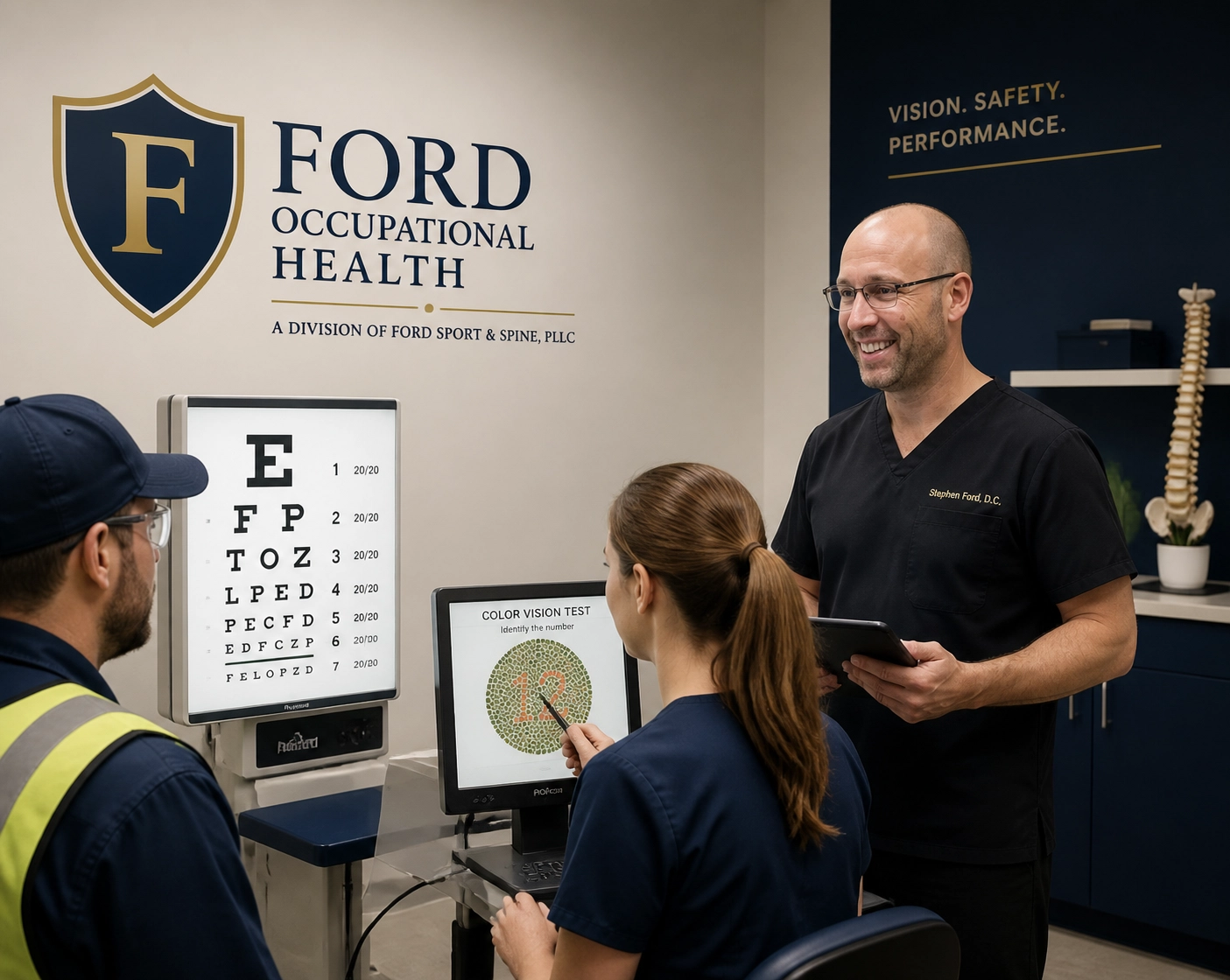
- Vision and hearing assessment
- Blood pressure and pulse measurements
- Required urinalysis
- Physical examination of relevant body systems
- Review of supporting medical documentation when needed
The medical examiner uses the examination findings, the driver’s reported history, and applicable FMCSA medical qualification requirements to make an independent determination.
A scheduled appointment does not guarantee a particular medical certification outcome. The result and certification period depend on the driver’s circumstances, the examination findings, and the medical examiner’s assessment.
Ford Occupational Health provides DOT physical examinations in Greater Houston for commercial drivers, owner-operators, motor carriers, staffing organizations, and transportation employers.
Who may perform the examination
FMCSA states that a DOT physical must be conducted by a licensed medical examiner listed on the FMCSA National Registry. The registry includes qualified medical professionals such as physicians, physician assistants, advanced practice nurses, and doctors of chiropractic who meet the applicable FMCSA requirements.
Employers and drivers should confirm that the selected examiner is listed on the National Registry. Using an examiner who is not properly listed may create an avoidable administrative problem.
Ford Occupational Health’s current DOT physical service page identifies an FMCSA-certified medical examiner and provides examination services for employers and commercial drivers. Employers may contact FOH to discuss individual appointments, recurring driver needs, or a defined referral process.
Driver responsibilities before the appointment
Drivers can help prepare for a DOT physical by bringing complete and accurate information. The following items may be useful:
Photo identification. Bring current identification requested for the appointment.
Medication information. Prepare an accurate list of prescription medications, over-the-counter medications, and other relevant treatments.
Medical documentation. Bring relevant specialist letters, test results, treatment information, or other records that may help explain a current medical condition.
Device-related information. If a driver uses a medical device or has been asked to provide compliance information, bring the applicable documentation.
Corrective devices. Bring prescription eyeglasses, contact lenses, hearing aids, or other devices used to meet functional requirements.
Employer instructions. Bring referral forms, account information, or scheduling instructions provided by the employer.
Drivers should answer medical history questions accurately and identify any significant conditions or treatment. Incomplete information can result in additional clarification or follow-up, depending on the circumstances.
The provider’s office may also give appointment-specific instructions. Drivers should review those instructions before arriving.
Employer responsibilities in the scheduling process
Employers often manage DOT physicals as part of a broader hiring, fleet, or workforce administration process. A defined workflow can make the process easier for HR, safety, operations, and fleet personnel.
An employer referral process should identify:
- The employee or applicant who needs the examination
- The requested service and examination type
- The employer contact responsible for coordination
- Any required forms or account information
- The preferred appointment window
- The work location or clinic preference
- The appropriate method for returning administrative documentation
Employers should also account for the time required to schedule the examination and address any documentation needs. Scheduling too close to a start date, dispatch date, or project deadline may leave less time to resolve questions.
Medical information should be handled through appropriate privacy and company procedures. The employer’s workflow should distinguish between information needed for scheduling or administrative coordination and protected clinical information.
For organizations with recurring driver examinations, an employer account or standing process may reduce repeated coordination. FOH’s Employer Portal and employer service team can be used to discuss scheduling and referral needs.
How certification periods can vary
FMCSA guidance states that a DOT physical examination may be valid for up to the applicable maximum period. A shorter certification period may be issued depending on medical findings, monitoring needs, or applicable FMCSA requirements.
The maximum period is not an automatic result. The medical examiner determines the appropriate certification period based on the driver’s individual circumstances and the examination.
Employers should therefore avoid assuming that every driver will receive the same certification period. A company’s internal tracking process should use the date shown on the applicable documentation and should allow time for future scheduling.
Drivers should review the information provided after the examination and understand whether additional follow-up or a future examination is indicated. Questions about the medical determination should be directed to the medical examiner.
For federal regulatory context, review the FMCSA DOT Medical Exam and Commercial Motor Vehicle Certification guidance.
Reducing avoidable delays for Houston employers
Houston-area transportation and commercial operations often coordinate drivers across multiple worksites, terminals, project locations, and staffing schedules. A practical referral workflow can help reduce unnecessary back-and-forth.
Employers may improve coordination by:
Designating one primary contact. Give the occupational health provider a consistent HR, safety, or fleet contact.
Providing complete referral details. Include the driver’s name, requested service, employer information, and any required forms.
Scheduling with the work calendar in mind. Consider onboarding dates, dispatch needs, project mobilization, and planned absences.
Giving drivers preparation instructions. Share the appointment time, location, identification requirements, documentation checklist, and employer contact information.
Planning for follow-up. If the medical examiner requests additional information or monitoring, establish a process for coordinating the next step.
Tracking future dates. Maintain an internal administrative reminder based on the documentation provided to the employer and driver.
These practices do not change the medical examiner’s independent determination. They are employer-side steps intended to support orderly scheduling and workforce planning.
DOT physicals for trucking, logistics, construction, and staffing employers
DOT physical examinations are relevant to more than traditional long-haul trucking operations. Employers in Greater Houston may coordinate examinations for commercial drivers working in:
- Trucking and transportation
- Fleet and delivery operations
- Construction and infrastructure
- Warehousing and logistics
- Manufacturing and industrial services
- Government contracting and public-sector operations
- Staffing programs that place workers in transportation or safety-sensitive roles
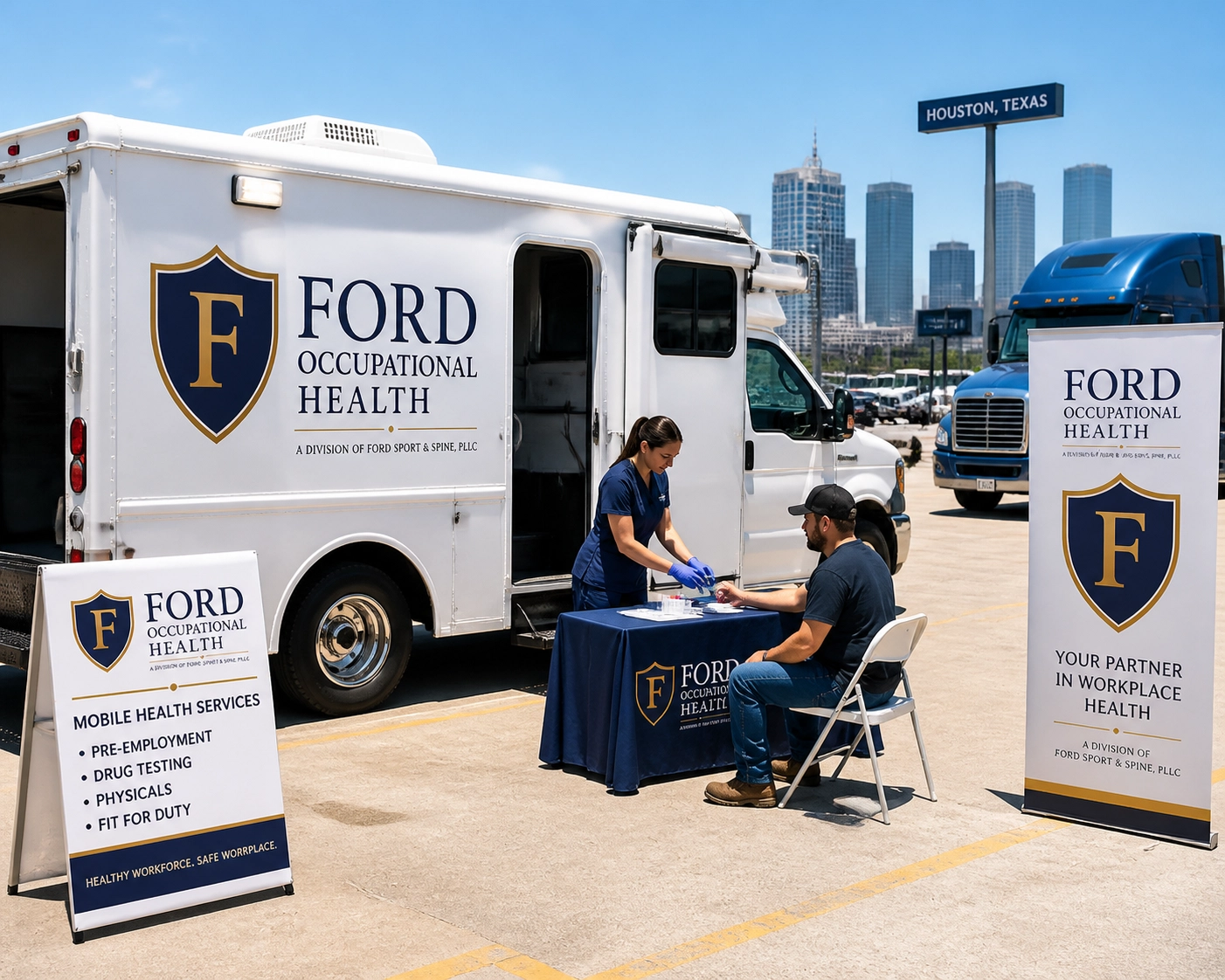
Each organization may have different scheduling requirements, documentation processes, and workforce volumes. The appropriate service model may involve individual clinic appointments, recurring employer referrals, or mobile occupational health services for eligible group needs.
FOH offers mobile occupational health services by arrangement. Availability depends on the requested service, equipment requirements, workforce size, location, scheduling, and provider availability.
For employers that need more than a DOT physical, FOH also provides DOT and non-DOT drug and alcohol testing and employment physicals. These services should be coordinated according to the employer’s specific workforce process and service requirements.
A practical next step for employers
A well-defined occupational health process begins with understanding the workforce requirement. Before requesting service, employers should be prepared to identify:
- Number of drivers or employees
- Requested examination or testing service
- Preferred scheduling window
- Clinic or mobile service preference
- Work locations
- Employer contact and referral process
- Any job-related or administrative requirements
Ford Occupational Health serves employers in Houston, Katy, West Houston, and surrounding Houston-area communities. The focus is responsive coordination for organizations that need to schedule commercial driver examinations and support a qualified, ready workforce.
To discuss individual appointments, an employer referral workflow, or recurring fleet needs, request employer services from Ford Occupational Health.
Frequently asked questions
What is a DOT physical?
A DOT physical is an FMCSA medical examination used to evaluate whether a commercial driver meets applicable medical qualification requirements. It must be performed by a licensed medical examiner listed on the FMCSA National Registry.
How long is a DOT Medical Examiner’s Certificate valid?
FMCSA guidance allows certification for up to the applicable maximum period. A shorter period may be issued depending on the driver’s medical findings, monitoring needs, or applicable FMCSA requirements.
What should a driver bring to a DOT physical?
Drivers should bring identification, an accurate medication list, relevant medical documentation, corrective lenses or hearing aids when used, and any employer referral forms or instructions.
Can an employer coordinate DOT physical appointments?
Yes. Employers may establish a scheduling and referral workflow for individual drivers, recurring appointments, or eligible group needs. The workflow should include clear contacts, required forms, scheduling expectations, and appropriate handling of medical information.
Where can Houston employers request DOT physical services?
Employers can contact Ford Occupational Health to discuss DOT physical examinations, employer scheduling, and fleet or workforce requirements in Greater Houston.