
Employer question: Which drug testing specimen should an employer use, urine, hair, or oral fluid?
Short answer: For DOT-regulated testing, employers should verify current specimen availability and requirements before implementation. Although DOT regulations authorize urine and oral-fluid testing, DOT oral-fluid testing cannot be implemented until all applicable federal laboratory and collection requirements are satisfied. Hair testing is not authorized for DOT testing.
For non-DOT employer-directed testing, hair, urine, or oral fluid may be considered based on the employer’s written policy, job requirements, applicable state and local requirements, and the testing provider’s laboratory process.
Specimen selection should be defined before an employee or applicant is sent for testing. Clear instructions help separate DOT and non-DOT programs, identify the correct panel, and support consistent collection procedures.
DOT and non-DOT programs have different specimen rules
DOT testing is governed by federal requirements under 49 CFR Part 40. Non-DOT testing is established through the employer’s policy and applicable requirements.
The distinction matters because a specimen type or collection process that may be considered for a non-DOT program is not automatically authorized for DOT testing.
Ford Occupational Health provides DOT and non-DOT drug and alcohol testing support for approved employer-directed testing needs. Employers should identify the program type and testing instructions before scheduling a collection.
DOT testing
Under USDOT 49 CFR Part 40.210, urine and oral fluid specimens are authorized for collection and testing. An employer can use one or the other at the beginning of a testing event, but not both simultaneously.
The rule also states that:
- Only urine and oral fluid specimens screened and confirmed at HHS-certified laboratories are allowed for DOT testing.
- Point-of-collection urine testing is not authorized for DOT testing.
- Point-of-collection oral fluid testing is not authorized for DOT testing.
- Hair testing is not authorized for DOT testing.
- Instant tests are not authorized for DOT testing.
These requirements apply to the regulated DOT process. They should not be replaced with a general workplace testing format.
Non-DOT testing
Non-DOT testing is employer-directed. The employer generally defines:
- Which positions are included.
- Which testing circumstances are authorized.
- Which substances are included in the panel.
- Which specimen types may be used.
- Which employer contacts can authorize testing.
- How results are received and handled.
Non-DOT programs may include pre-employment, random, post-accident, reasonable suspicion, return-to-duty, follow-up, and other approved testing circumstances. The employer’s policy should clearly identify whether the program permits urine, hair, oral fluid, or another approved process.
Employers should also review applicable state and local requirements before implementing or changing a non-DOT testing policy.

What employers should know about each specimen type
Urine testing
Urine is the specimen type most commonly associated with workplace drug testing and is the specimen type available in practice for DOT-regulated testing as of September 2026.
Urine may also be used in non-DOT programs when it is included in the employer’s policy and the collection and laboratory process are appropriate for the program.
Employers should define the required panel and testing reason on the order. A collection provider should receive clear instructions identifying whether the test is DOT or non-DOT.
Hair testing
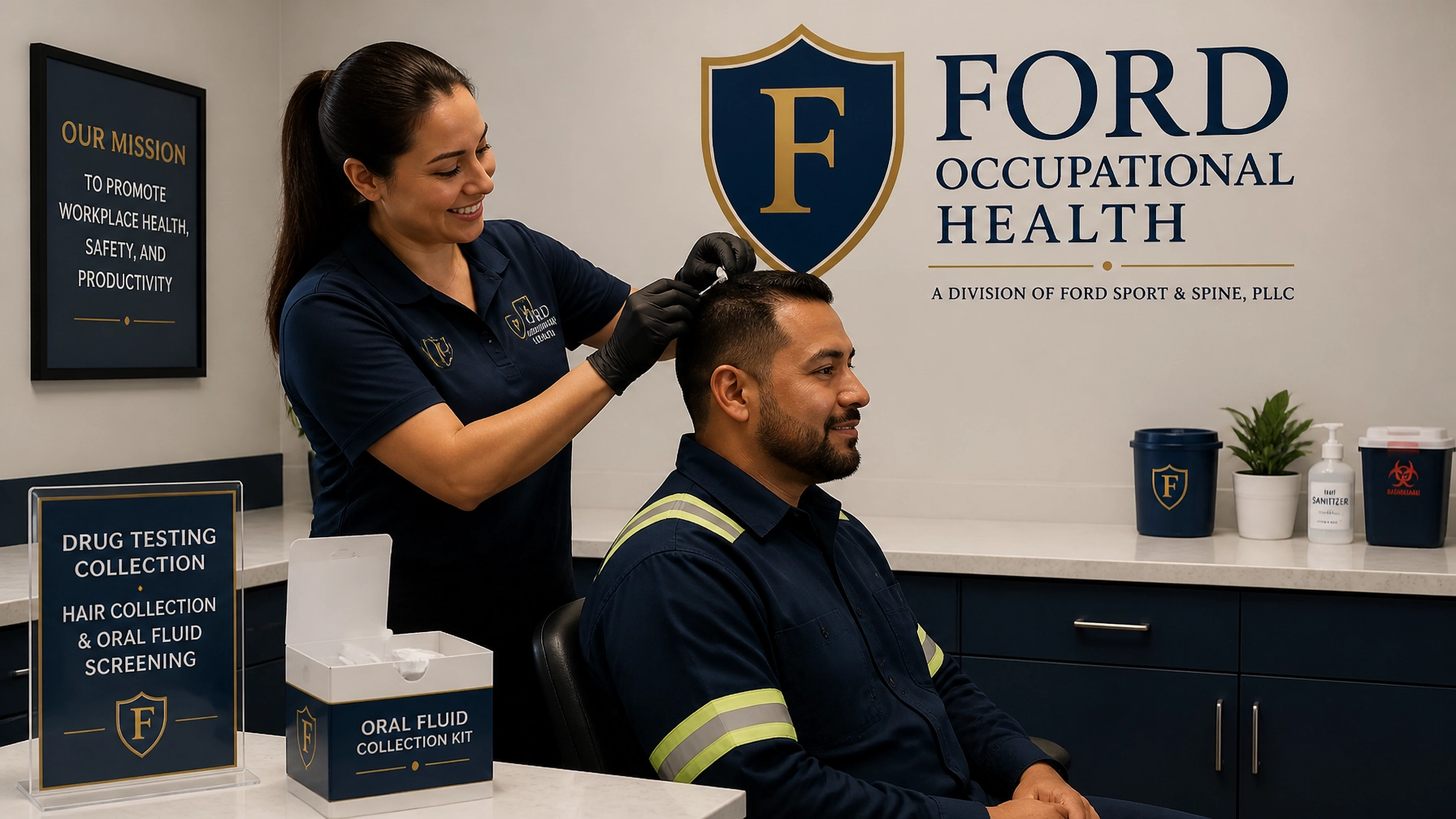
Hair testing is not authorized for DOT-regulated testing. It remains an option that many employers use for non-DOT employer-directed programs, subject to the employer’s policy and applicable state and local requirements.
Hair testing may be considered when an employer’s program calls for a different specimen approach. The employer should confirm the testing panel, collection requirements, laboratory process, and technical details with the testing provider or laboratory.
Hair testing should never be represented as a DOT test or used to substitute for a required DOT collection process.
Oral fluid testing
Oral fluid testing is authorized under the DOT rule in principle. However, DOT oral fluid testing cannot currently be implemented.
USDOT’s Office of Drug and Alcohol Policy and Compliance states that at least two HHS-certified oral fluid laboratories are required before an employer may begin using oral fluid testing in a DOT drug testing program. The USDOT list of HHS-certified oral fluid laboratories currently states that there are no HHS-certified oral fluid drug testing laboratories.
The practical result is clear: employers should not build a DOT program expecting to use oral fluid testing at this time.
Oral fluid may still be considered for a non-DOT employer-directed program when the employer’s policy, provider, laboratory, and applicable requirements support that approach. The specific panel and technical details should be confirmed before implementation.
Comparison of urine, hair, and oral fluid testing
| Specimen type | DOT status as of September 2026 | Non-DOT planning considerations |
|---|---|---|
| Urine | Authorized under Part 40 and available in practice for DOT testing when the required process is followed | May be used when included in the employer’s policy and supported by the testing provider and laboratory |
| Oral fluid | Authorized under Part 40, but not currently implementable because there are no HHS-certified oral fluid drug testing laboratories | May be considered when the employer’s policy and testing arrangements support it |
| Hair | Not authorized for DOT testing | May be used for non-DOT employer-directed testing, subject to policy and applicable requirements |
| Point-of-collection or instant formats | Not authorized for DOT testing | Non-DOT use depends on the employer’s policy, provider, laboratory, and applicable requirements |
This comparison addresses specimen selection only. It does not determine whether a particular employee must be tested, which panel is appropriate, or how a result should be handled.
Define the testing workflow before the collection
A structured employer account helps reduce confusion when testing is needed during hiring, an incident review, or a regulated follow-up process.
Employers should establish:
- Authorized contacts: Identify the HR, safety, fleet, or operations personnel who may authorize testing.
- Program designation: Clearly mark each order as DOT or non-DOT.
- Testing reason: Identify whether the collection is for pre-employment, random, post-accident, reasonable suspicion, return-to-duty, follow-up, or another approved reason.
- Panel instructions: Define the requested panel and communicate it to the collection provider.
- Specimen instructions: State the required specimen type for the applicable program.
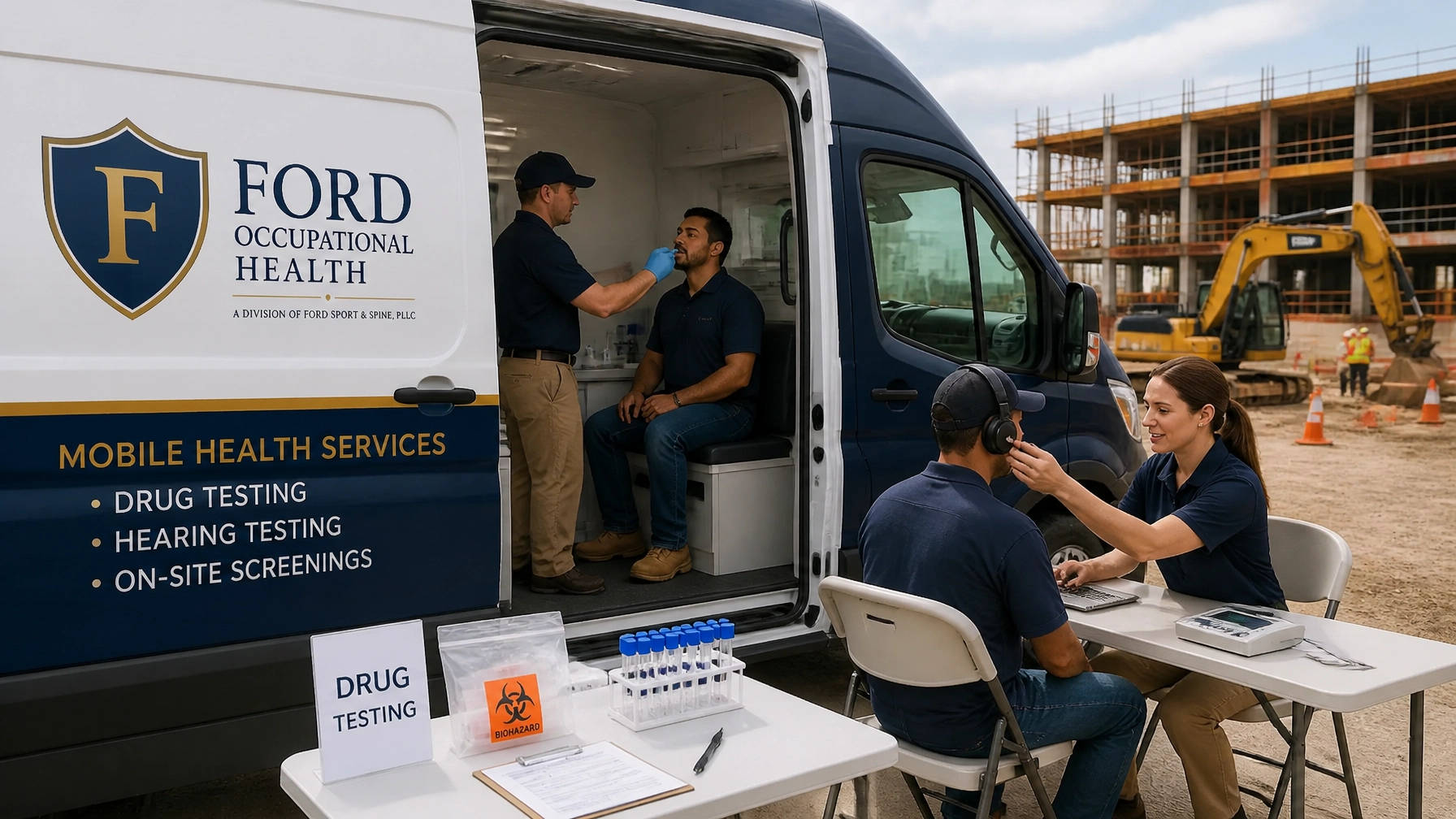
- Collection location: Decide whether the employee will attend a clinic, scheduled group event, or mobile collection.
- Laboratory, MRO, and TPA details: Provide the applicable program information when those participants are involved.
FOH provides collection support. FOH should not be treated as the employer’s laboratory, Medical Review Officer, or third-party administrator.
Clinic, scheduled group, and mobile collection options
The collection model should match the workforce and operating environment.
Clinic collection may be appropriate when individual applicants or employees can travel to a scheduled location.
Scheduled group collection may help employers coordinate multiple employees or candidates through a defined event.
Mobile collection by arrangement may support employers with distributed crews, active worksites, fleet yards, warehouses, and industrial locations. Ford Occupational Health provides mobile occupational health services based on the requested service, location, workforce size, site requirements, and scheduling needs.
For employer account coordination, the FOH Employer Portal provides a starting point for testing requests, onboarding coordination, mobile-service planning, and other workforce services.
Houston-area industries that may need defined testing programs
Specimen selection and collection logistics can affect several workforce groups across Greater Houston, Katy, West Houston, and surrounding Houston-area communities.
Relevant employer environments include:
- Transportation and logistics: DOT-regulated drivers, fleet personnel, dispatch operations, and warehouse teams.
- Construction and infrastructure: Project-based crews, contractors, and safety-sensitive field positions.
- Staffing: Applicants who require employer-directed screening before placement.
- Oil and gas and industrial operations: Employees working in controlled-access or safety-sensitive environments.
- Manufacturing: Production, maintenance, and equipment-focused roles.
- Warehousing and distribution: Employees working around powered equipment, loading operations, and high-volume facilities.
- Skilled trades: Workers whose duties involve tools, machinery, vehicles, or physically demanding job functions.
- Government and public-sector employers: Organizations with defined workforce screening or program requirements.
The right collection process depends on the employer’s policy, job classifications, testing reason, specimen instructions, location, and applicable requirements.
Frequently asked questions
Is hair testing allowed for DOT drug testing?
No. Hair testing is not authorized for DOT-regulated testing under 49 CFR Part 40. Hair may be considered for non-DOT employer-directed testing when the employer’s policy and applicable requirements support it.
Can a DOT employer use oral fluid testing now?
Not currently. Although Part 40 authorizes oral fluid testing, USDOT/ODAPC states that two HHS-certified oral fluid laboratories are required before DOT oral fluid testing may begin. The current USDOT list states that there are no HHS-certified oral fluid drug testing laboratories.
Can an employer use both urine and oral fluid at the beginning of one DOT testing event?
No. The employer may select urine or oral fluid at the beginning of the event, but not both. If a collection problem requires a second collection, a different specimen type may be selected under the circumstances described in Part 40.
Can a non-DOT employer choose hair testing?
A non-DOT employer may consider hair testing as part of an employer-directed program, subject to its written policy and applicable state and local requirements. The employer should confirm the collection and laboratory details before implementation.
Does FOH provide laboratory or MRO services?
FOH provides professional collection support for DOT and non-DOT employer testing. Laboratory, Medical Review Officer, and third-party administrator functions remain with the applicable program participants.
Employer next steps
Employers should begin with the program designation, not the specimen container. Identify which employees are DOT-regulated, define the non-DOT policy where applicable, and document the testing reason, panel, specimen instructions, and collection model.
Ford Occupational Health can discuss your testing program, including:
- DOT or non-DOT designation.
- Urine, hair, or oral fluid specimen instructions.
- Requested testing panels.
- Pre-employment, random, post-accident, reasonable-suspicion, return-to-duty, or follow-up needs.
- Clinic, scheduled group, or mobile collection options.
To discuss your workforce, locations, and testing requirements, request Employer Services from Ford Occupational Health.