
Employer question: What is the difference between DOT and non-DOT drug testing, and how should a Houston employer structure both programs?
DOT drug testing applies to employees whose duties are covered by a U.S. Department of Transportation agency rule. For many Houston employers, this includes commercial motor vehicle drivers performing safety-sensitive functions under Federal Motor Carrier Safety Administration requirements.
Non-DOT testing is an employer-directed program. It is established through the company’s written policy, job requirements, applicable state law, and other relevant requirements. The two programs may operate within the same organization, but their pools, procedures, documentation, and testing instructions should remain distinct.
Who falls under DOT and non-DOT testing?
DOT-regulated employees
DOT testing applies to employees covered by a DOT agency regulation. Under FMCSA, this generally includes drivers who operate qualifying commercial motor vehicles on public roads and perform safety-sensitive functions.
The employer is responsible for identifying which positions fall under the applicable DOT requirements. Job title alone may not determine whether a position is covered. Employers should review the vehicle, driving activity, license requirements, and applicable FMCSA rules when making that determination.
FMCSA-regulated testing may include:
- Pre-employment testing
- Random testing
- Post-accident testing
- Reasonable-suspicion testing
- Return-to-duty testing
- Follow-up testing
DOT testing is not simply a standard workplace drug screen with a federal label. It is a regulated process with defined requirements for the employer, collection site, laboratory, Medical Review Officer, and other service providers.
Non-DOT employees
Non-DOT testing applies to employees who are not covered by a DOT testing rule but are included in the employer’s workplace testing policy.
These positions may include:
- Non-CDL drivers
- Warehouse and logistics employees
- Construction and skilled-trade personnel
- Manufacturing employees
- Office or administrative staff
- Other safety-sensitive or physically demanding positions not covered by DOT rules
A non-DOT program may be designed around the employer’s workforce, job demands, risk-management objectives, and written policy. The testing panel, specimen type, testing reasons, and random testing approach may differ from the DOT program, depending on applicable requirements.
Employers should not describe a non-DOT test as a DOT test or use non-DOT results to represent that a DOT-regulated process occurred.
How the administrative process differs
The primary difference is not only who is tested. It is how the testing program is administered and documented.
DOT testing
DOT testing is conducted under federal procedures. Depending on the applicable agency and test type, the process may include:
- Regulated collection procedures
- Standardized custody-and-control documentation
- Analysis by an HHS-certified laboratory
- Medical Review Officer review
- Defined testing reasons and procedures
- Required employer records and program controls
The employer must provide clear instructions to the collection site and maintain an appropriate process for identifying the employee, authorizing the test, receiving results, and managing follow-up requirements when applicable.
Non-DOT testing
Non-DOT testing is governed by the employer’s written policy and applicable law. The employer generally defines:
- Which positions are included
- Which testing reasons are authorized
- Which substances are included in the panel
- Which specimen types may be used
- How random testing is administered
- Which employer contacts may authorize testing
- How results are received and handled
A written policy should be specific enough that supervisors, HR personnel, employees, and collection providers understand what is expected. Vague instructions can lead to inconsistent testing, incorrect panels, or confusion about whether a test is DOT or non-DOT.
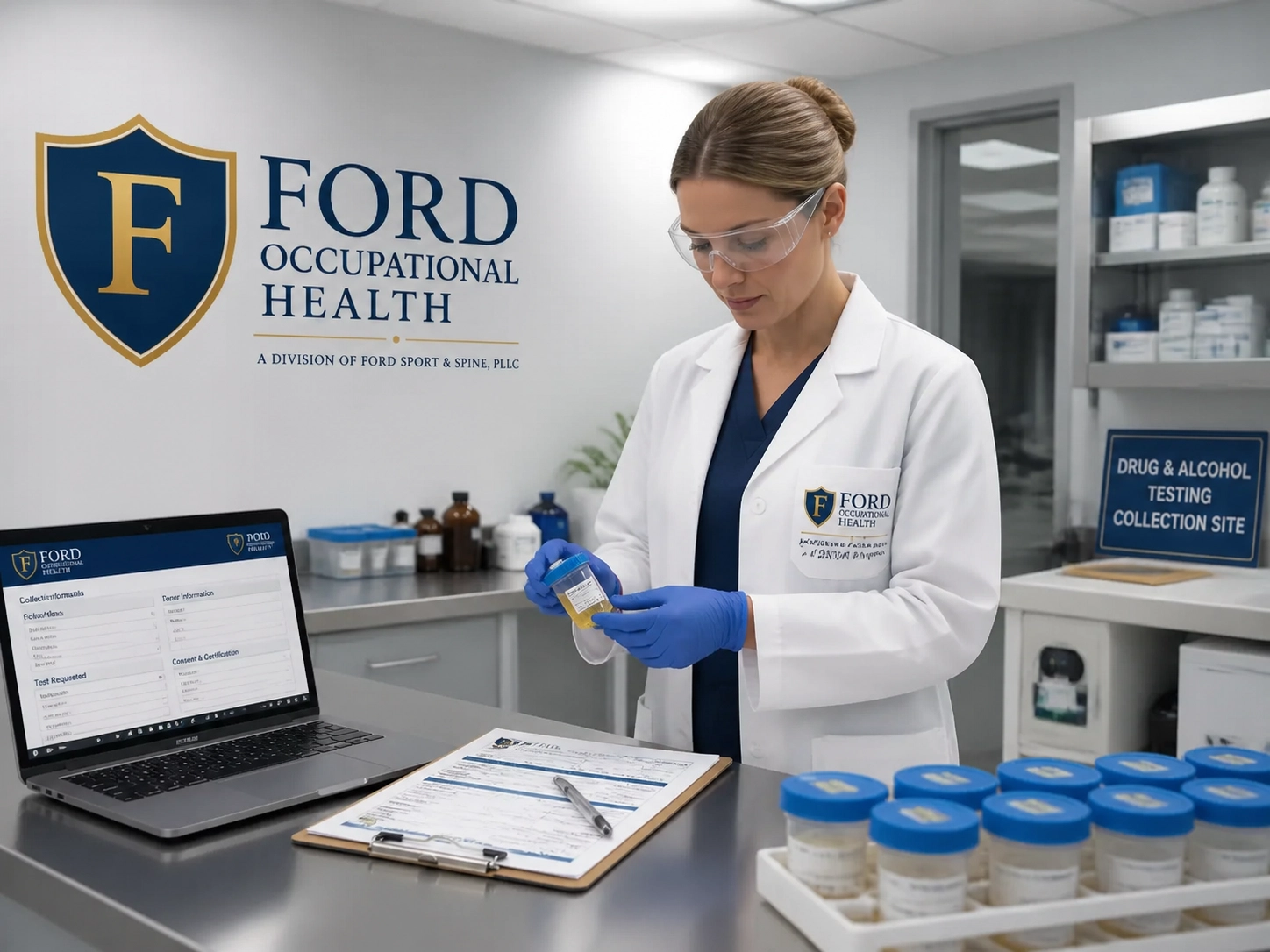
Employers can review DOT and non-DOT drug and alcohol testing support from Ford Occupational Health when establishing a defined collection workflow.
2026 FMCSA random testing rates
For calendar year 2026, the FMCSA minimum annual random testing rates are:
- 50% for controlled substances
- 10% for alcohol
These rates apply to the applicable FMCSA-regulated random testing program. The USDOT 2026 random testing rates page identifies the current rates by DOT agency.
The rates are annual minimums for the regulated program. They do not automatically apply to non-DOT employees, and they should not be used as a default rate for every workplace testing program.
Employers with multiple DOT-regulated employee groups or other regulated operations should verify which agency requirements apply. Random testing rates may differ between DOT agencies. The FMCSA drug and alcohol testing program provides federal program information for employers and covered drivers.
Why DOT and non-DOT pools should remain separate
DOT and non-DOT employees may work at the same facility or for the same company. That does not mean they should be placed in the same testing pool.
Keeping the programs separate helps employers:
- Identify which employees are subject to DOT requirements
- Apply the correct testing reason and panel
- Avoid using a non-DOT form or process for a DOT test
- Maintain accurate random testing records
- Give collection providers clear instructions
- Avoid representing an employer-policy test as a federally regulated test
- Manage different documentation and results-handling requirements
A Houston transportation company, for example, may have FMCSA-covered commercial drivers, non-CDL yard personnel, mechanics, warehouse employees, and office staff. The organization may test several of these groups, but the DOT-covered drivers should be identified and managed through a separate DOT process.
The written employer policy should explain how the groups are classified. Authorized contacts should also know which testing order applies to each employee and testing circumstance.
Choosing between urine, hair, and oral fluid
Specimen choice affects the detection window, collection process, cost structure, laboratory arrangements, and overall program design.
Urine
Urine testing is widely used in workplace drug testing programs. It may be used for DOT or non-DOT testing when the applicable process and requirements support it.
Hair
Hair testing may provide a longer detection window than some other specimen types. Employers considering hair testing should evaluate whether it is appropriate for the stated policy, job requirements, applicable law, and laboratory process.
Oral fluid
Oral fluid collection may offer a different collection experience and detection window. Its use depends on the testing program, applicable requirements, and the laboratory and collection arrangements available.
DOT and non-DOT programs should not be assumed to have the same specimen options. Employers should confirm that the specimen type and collection process are authorized for the specific DOT test before using them. Non-DOT employers should define specimen requirements in the written policy and communicate them clearly to the collection provider.
Practical steps for setting up a Houston employer program
A structured setup can reduce confusion when a test is needed during hiring, an accident investigation, a reasonable-suspicion situation, or a return-to-duty process.
1. Identify covered job groups
List the positions that require DOT testing and the positions that may be included in a non-DOT policy. Document the basis for each classification.
2. Create or review the written policy
The policy should describe testing reasons, employee groups, panels, specimen types, authorization procedures, and results handling. Employers should review the policy for consistency with applicable requirements before implementation.
3. Establish authorized employer contacts
Identify the HR, safety, fleet, or operations contacts who may authorize testing. Define who receives results and who manages follow-up communication.
4. Define the testing order
Each testing request should identify the employee, testing reason, DOT or non-DOT status, panel instructions, and any applicable program details. This information should be available before the employee arrives for collection.
5. Select the collection model
Houston-area employers may use:
- Individual clinic appointments
- Scheduled group collections
- Mobile collection by arrangement
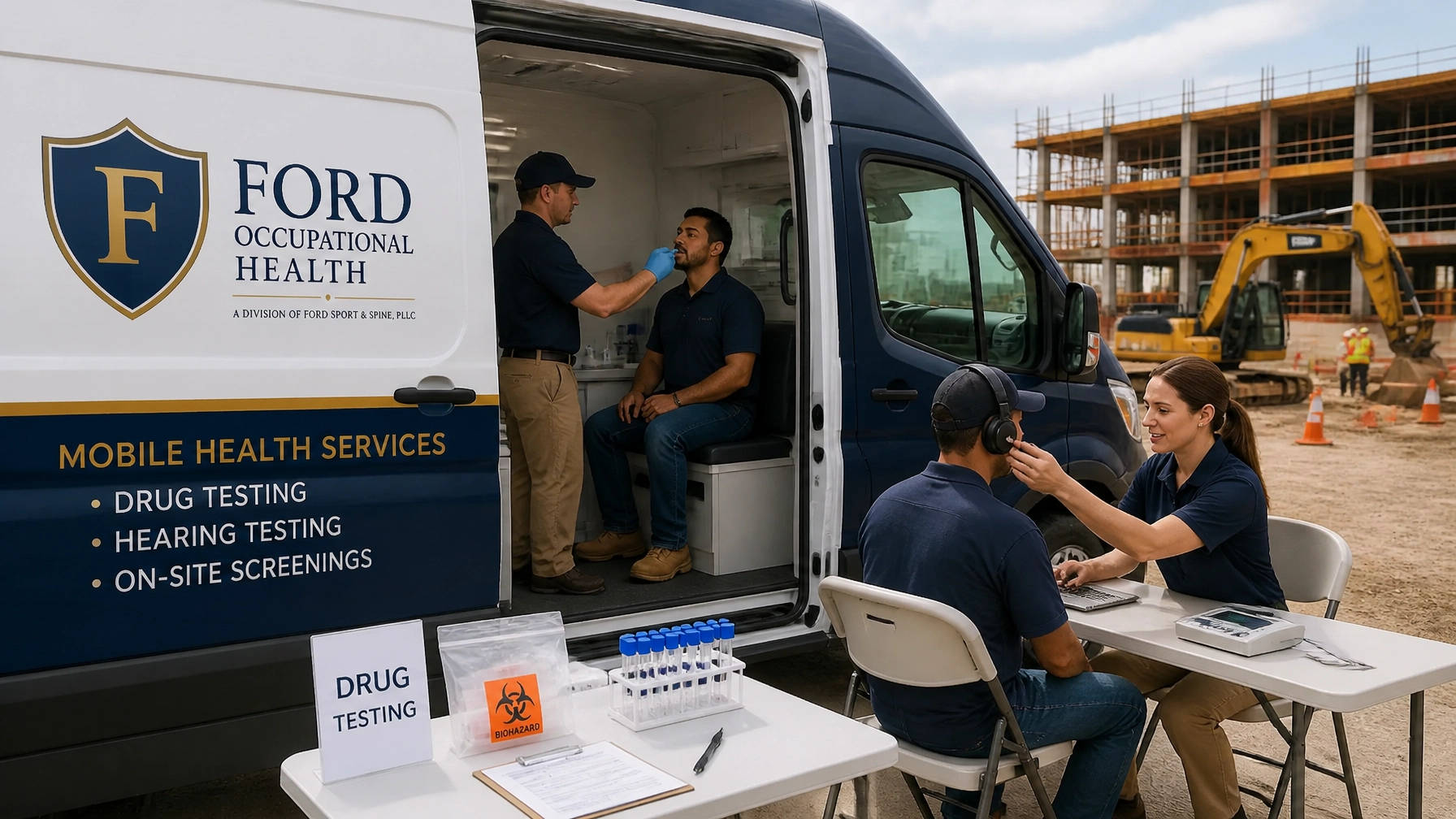
Mobile occupational health services may be useful for construction sites, fleet yards, warehouses, industrial facilities, and employers with distributed crews. Ford Occupational Health provides mobile occupational health services by arrangement based on the requested service, location, workforce size, and site requirements.
6. Coordinate the program participants
When applicable, employers should define how the collection provider, laboratory, Medical Review Officer, and third-party administrator will coordinate. FOH provides professional collection support and employer-directed testing services. It should not be treated as the employer’s laboratory, Medical Review Officer, or third-party administrator.
Clear coordination supports accurate instructions, appropriate documentation, and consistent communication.
Coordinating drug testing with hiring and workforce programs
Drug testing is often one part of a broader onboarding or workforce-readiness process. Employers may coordinate testing with employment physicals when a position requires a job-related examination or other approved employer-directed components.
The testing program should still remain clearly defined. A physical examination, a DOT medical examination, and a drug test are separate services with different purposes and documentation requirements.
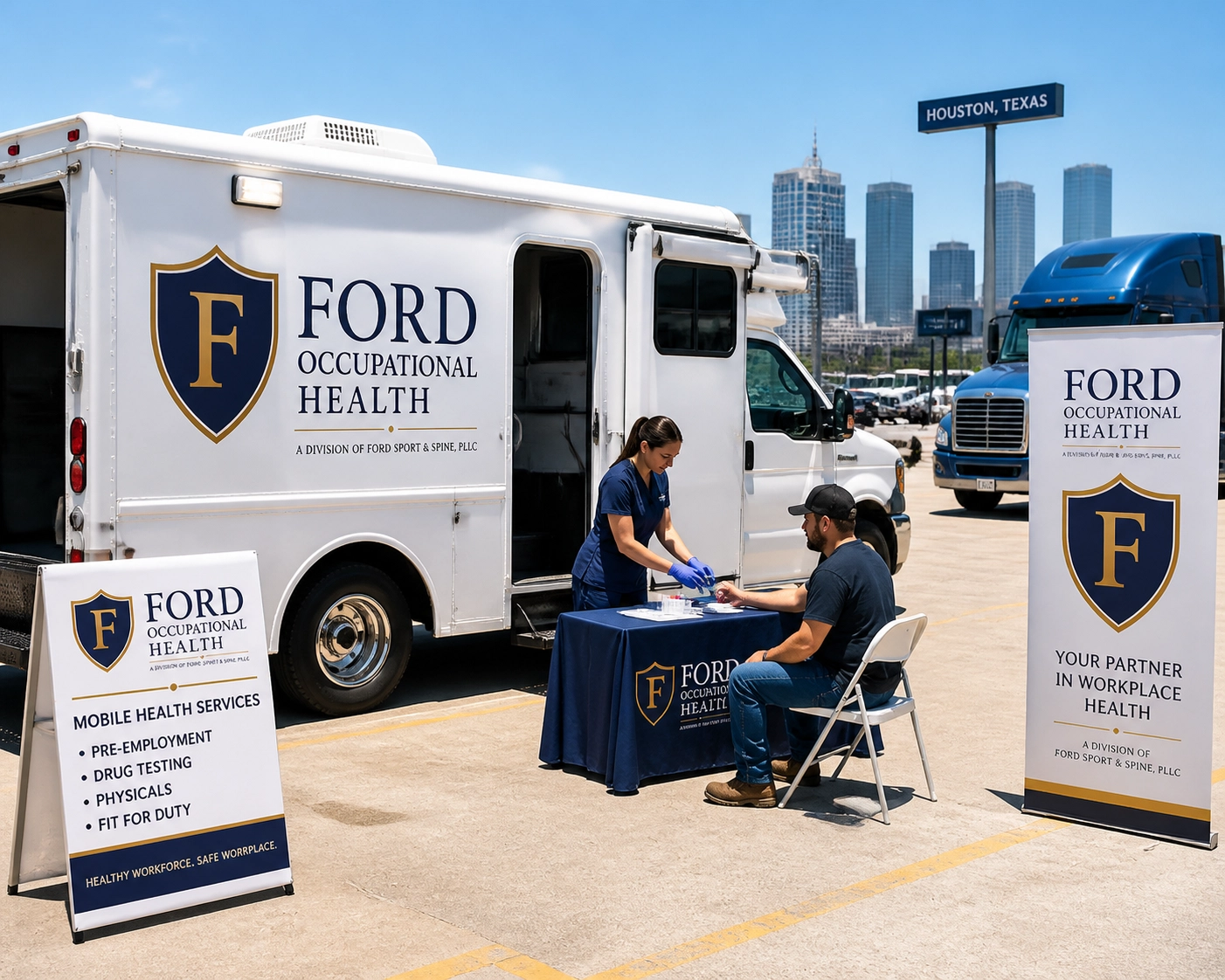
For employers in Houston, Katy, and surrounding Houston-area communities, clinic, scheduled group, and mobile options may help reduce travel and limit disruption to hiring or operations. The appropriate model depends on the workforce, location, service requirements, and scheduling needs.
Frequently asked questions
Is DOT drug testing the same as a regular workplace drug test?
No. DOT testing follows federal procedures and defined documentation requirements. A non-DOT test is conducted under the employer’s written policy and applicable requirements. The two tests should not be treated as interchangeable.
Can non-CDL employees be placed in the DOT random pool?
Generally, employees who are not covered by the applicable DOT safety-sensitive requirements should not be included in the DOT random pool. An employer may establish a separate non-DOT testing pool for those employees when appropriate.
What are the 2026 FMCSA random testing rates?
The 2026 FMCSA minimum annual random testing rates are 50% for controlled substances and 10% for alcohol. Employers should verify the requirements that apply to their specific operation.
Can one employer use both DOT and non-DOT testing?
Yes. Many employers use both programs when their workforce includes DOT-covered drivers and other employees. The programs should have separate classifications, instructions, pools, and records.
Does FOH provide laboratory or Medical Review Officer services?
FOH provides professional collection support and employer-directed testing services. Laboratory, Medical Review Officer, and third-party administrator functions are coordinated with the applicable program participants when required.
Employer next steps
A practical testing program starts with a clear understanding of the workforce, job classifications, testing reasons, panels, specimen requirements, and collection locations.
Ford Occupational Health supports employer-directed DOT and non-DOT testing through clinic, scheduled group, and mobile collection models by arrangement. Houston-area employers can request employer services and provide information about their workforce, locations, testing needs, and current process for review.
Pingback: Random Drug Testing Programs: A Practical Guide for Employers - Ford Occupational Health