
Can employee testing be completed at a Houston-area worksite?
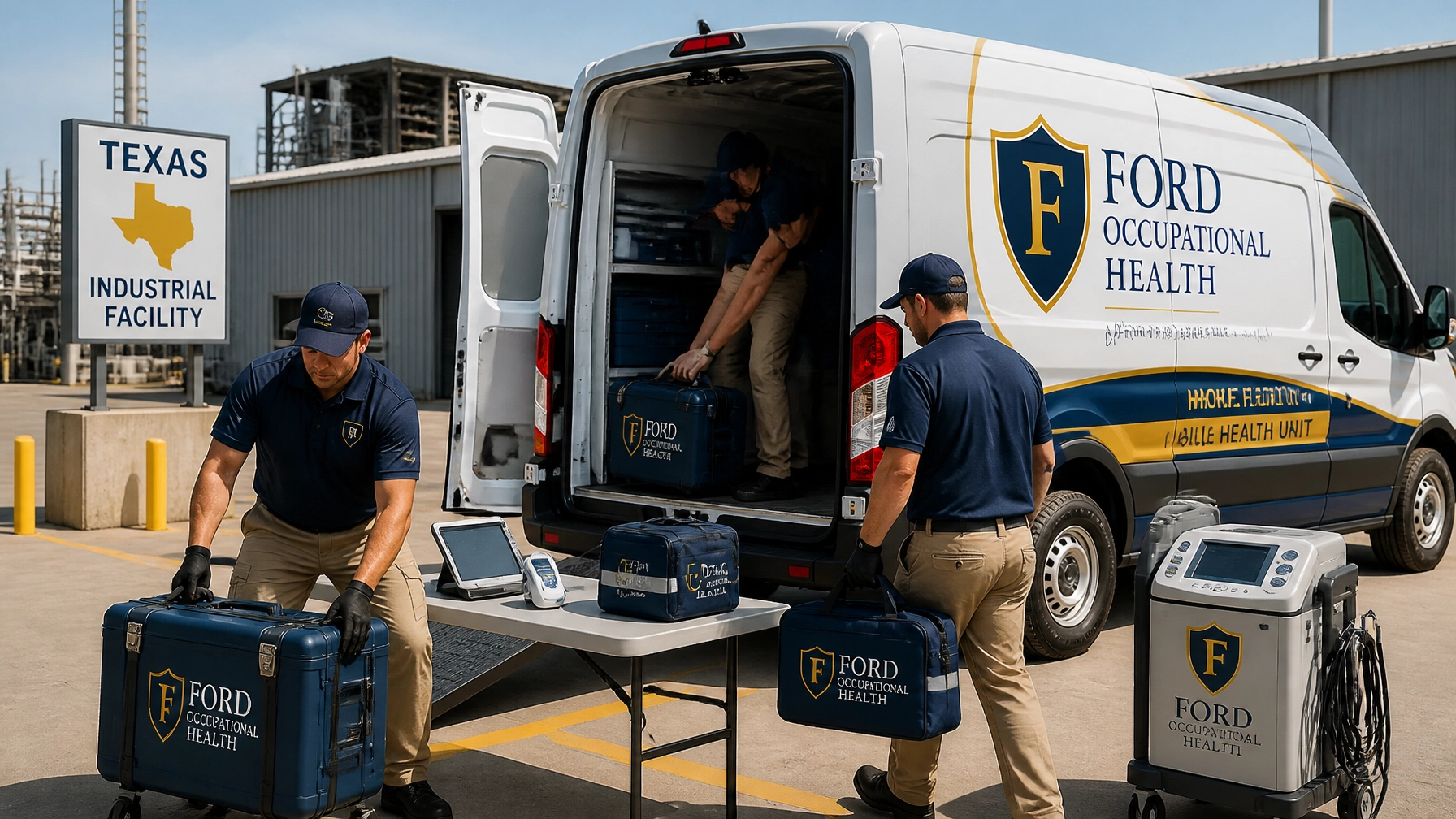
In many cases, yes. Ford Occupational Health provides mobile occupational health services for employers across Greater Houston. Depending on the service requested, equipment requirements, workforce size, location, scheduling, and provider availability, occupational health professionals may complete testing and screening at the employer’s site.
Mobile service is designed to reduce employee travel, limit time away from the job, and simplify coordination for group testing. It can support individual appointments, new-hire onboarding, scheduled workforce events, and other employer-directed programs.
For employers with construction crews, fleet operations, warehouse teams, manufacturing employees, industrial workforces, or staffing programs, bringing services to the worksite may create a more efficient process than sending employees to separate off-site appointments.
Explore mobile occupational health services
Why employers use on-site occupational health services
Off-site testing can require employees to leave the worksite, travel to a clinic, wait for service, and return to the job. This creates scheduling challenges for HR, safety, and operations teams. It may also be more difficult to coordinate when employees work in shifts, travel between locations, or report to a temporary project site.
Mobile occupational health services may help employers:
- Reduce employee travel and time away from assigned duties
- Coordinate multiple services during one scheduled event
- Support onboarding for groups of applicants or new hires
- Limit disruption to production, field operations, or fleet schedules
- Provide a defined process for rosters, forms, instructions, and reporting
- Extend occupational health access to suitable job sites and workforce locations
- Scale service delivery from one employee to a larger group event
The objective is not simply to move a clinic. The objective is to establish a practical service process around the employer’s workforce, location, job requirements, and schedule.
What services can be provided through mobile delivery?
Mobile availability depends on the requested service and the conditions at the employer’s location. Ford Occupational Health’s approved mobile service capabilities include the following.
Drug and alcohol testing
Mobile collection support may be arranged for approved employer testing needs, including pre-employment, random, post-accident, reasonable-suspicion, return-to-duty, follow-up, and other testing circumstances.
Employers should define the testing type, panel instructions, authorized contacts, collection process, and documentation expectations before the event. DOT and non-DOT requirements should remain clearly distinguished within the employer’s testing workflow.
Review drug and alcohol testing services
Employment physicals
On-site employment physicals may be appropriate for group onboarding programs and employer-directed examination events. These examinations can be organized around the requirements of the position and may include approved job-related components when appropriate.
Employers should provide the job title, essential duties, required forms, and examination requirements so the service can be scoped correctly.
Hearing and vision testing
Occupational hearing testing and vision testing may support employer programs and designated workforces. These services can be coordinated with other onboarding or workforce screening activities when the site and equipment requirements are suitable.
A clear job-related purpose, employee roster, testing environment, and documentation process help the event run efficiently.
Spirometry
Mobile spirometry may be available for employer-directed respiratory testing programs when the required equipment, environment, and service scope can be supported at the location.
Employers should identify the program requirements, job exposures, employee population, and reporting expectations before scheduling.
Review occupational spirometry
Functional screening
Functional screening may include job-related physical ability components in suitable environments. Depending on the referral, the assessment may address lifting, carrying, mobility, positional tolerance, or other physical abilities relevant to defined work demands.
The worksite must provide an appropriate environment for the requested activities. Employers should identify the essential functions of the position and the specific question the evaluation is intended to address.
Review functional ability evaluations
Wellness and safety events
Ford Occupational Health may also support employer wellness and safety events focused on education, readiness, and workforce health initiatives. The scope should be defined in advance based on the event goals, workforce size, site conditions, and requested services.
Which Houston-area employers may benefit?
Mobile occupational health services may be useful for employers that need to coordinate services around active operations rather than individual clinic appointments.
Construction and infrastructure
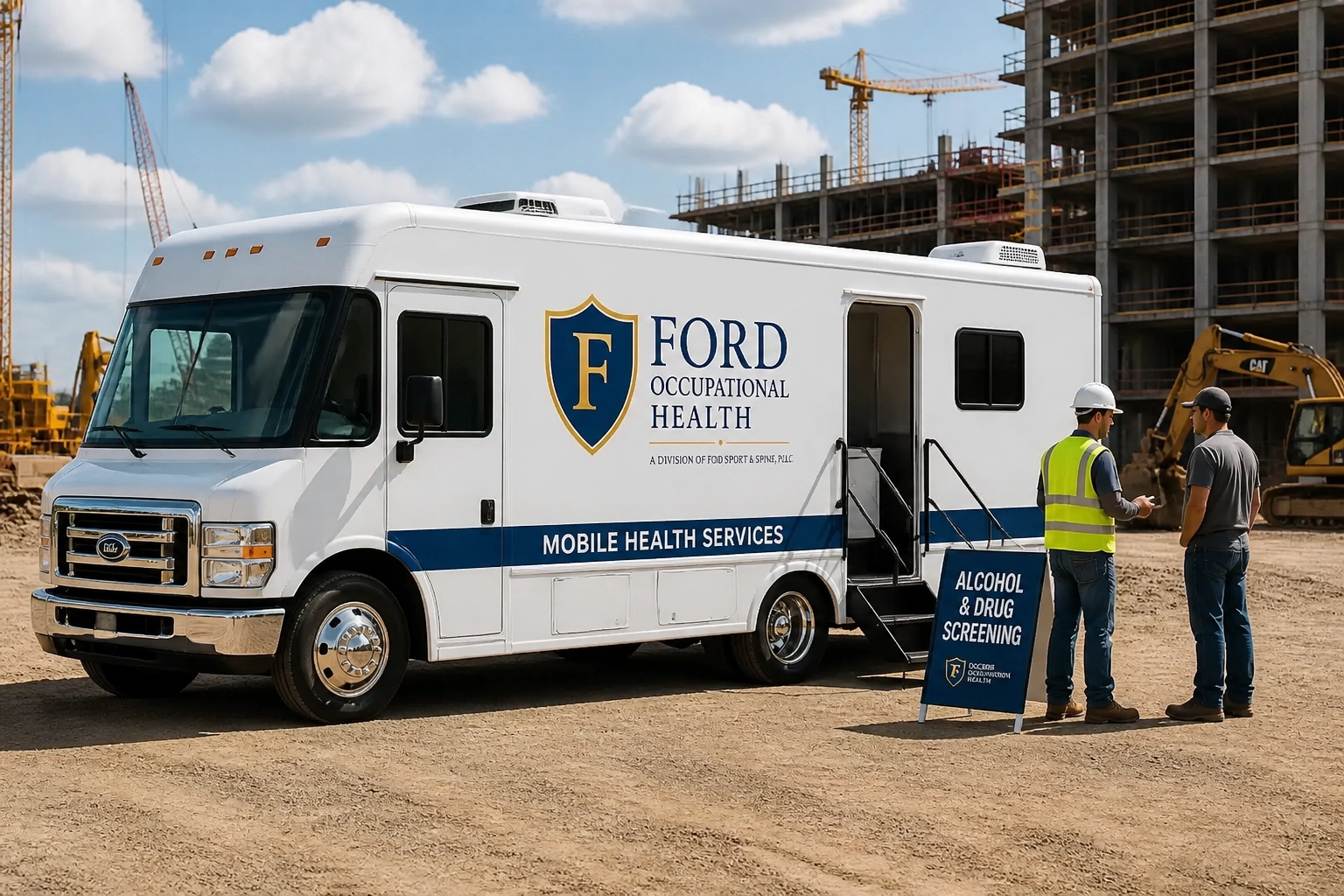
Construction employers often manage changing project sites, field crews, subcontractors, and onboarding schedules. Mobile testing may help coordinate services near the worksite while limiting travel away from active projects.
Transportation and fleet operations
Fleet and transportation employers may need structured testing and examination workflows for drivers and other safety-sensitive employees. Employers can discuss DOT physicals and other requested services with FOH to determine the appropriate delivery model.
Mobile availability for a specific service must be reviewed based on the testing requirements, location, equipment, schedule, and provider availability.
Warehousing and manufacturing
Warehouses and manufacturing facilities may have larger employee populations, shift-based schedules, and limited flexibility for off-site appointments. A scheduled on-site event may support onboarding, occupational screening, or recurring workforce requirements with less operational disruption.
Oil, gas, and industrial employers
Industrial employers may operate across large facilities or locations where employee travel can create scheduling friction. Mobile services may help bring approved testing and screening capabilities closer to the workforce when the site can support the requested service.
Staffing and workforce providers
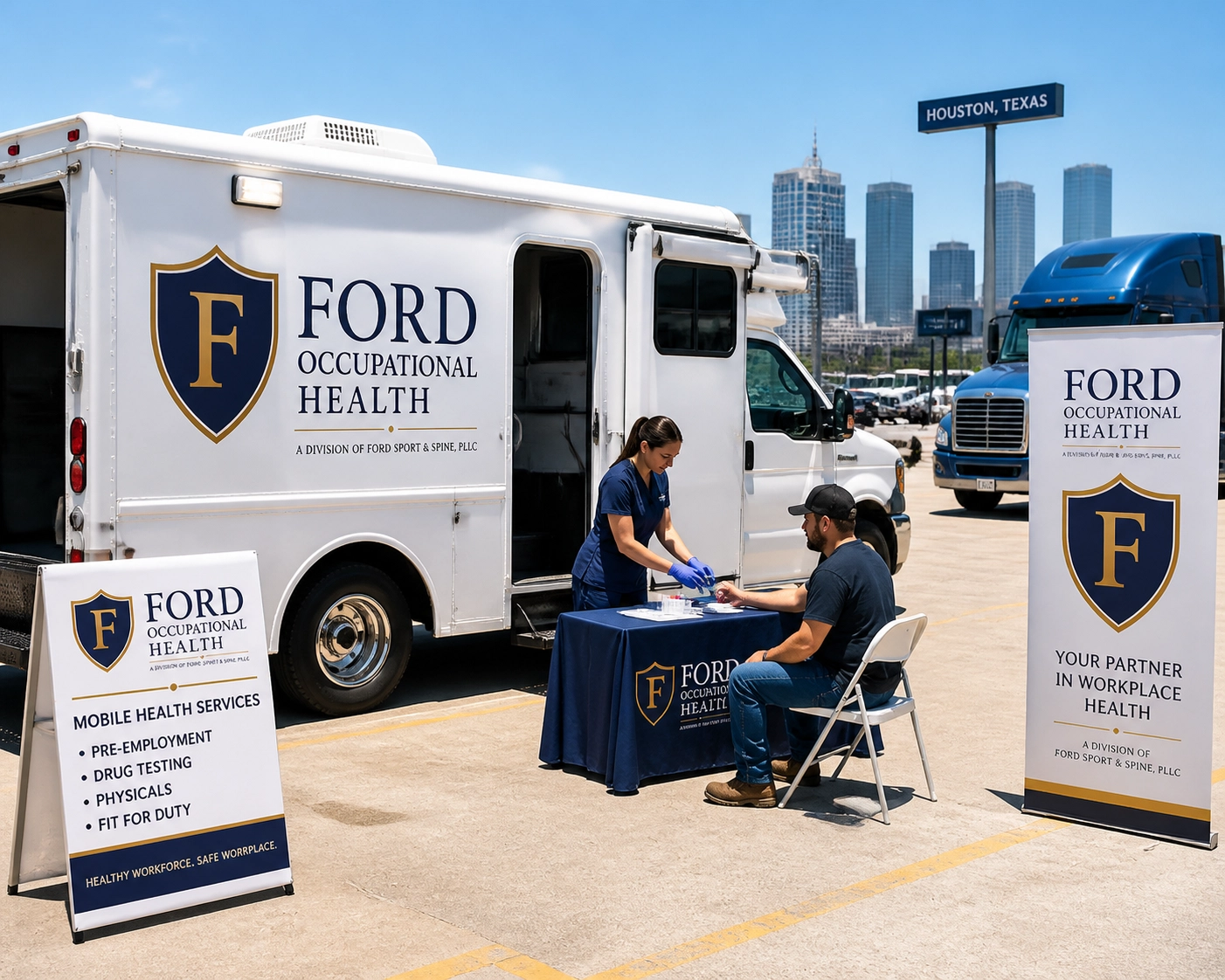
Staffing companies may coordinate examinations and testing for multiple applicants or employees entering different job assignments. A defined mobile event can support group scheduling when the employee population, job requirements, and documentation process are established in advance.
How to prepare for a mobile occupational health event
A successful mobile event begins before the clinical team arrives. Employers should prepare the information and conditions needed to complete the requested services.
1. Define the service scope
Identify the requested service, number of employees, job categories, testing requirements, and any required components. A single service may require different equipment or conditions than a multi-service event.
2. Confirm the site
Provide the worksite location, access instructions, parking or staging information, available workspace, privacy considerations, power requirements, and any environmental restrictions.
3. Prepare the employee list
A roster with employee names, job titles, contact information, appointment windows, and referral reasons can reduce confusion during the event. Employers should also identify authorized contacts for scheduling and documentation.
4. Establish the documentation process
Confirm employer forms, testing instructions, reporting expectations, and the process for handling incomplete information. The FOH employer portal provides a central resource for service requests, onboarding coordination, and mobile-service planning.
5. Build a realistic schedule
The number of employees, requested services, site conditions, equipment requirements, and provider availability all affect scheduling. A defined appointment window helps reduce interruptions and supports orderly employee flow.
Mobile service should be planned around the workforce
Mobile occupational health is not a universal replacement for clinic-based service. It is one delivery option that may be appropriate when the service, workforce, location, and site conditions align.
The best starting point is a clear employer request:
- Where is the workforce located?
- How many employees need service?
- Which services are required?
- Are employees being hired, evaluated, tested, or monitored under an existing program?
- What job duties or safety requirements apply?
- What schedule and documentation process does the employer need?
Ford Occupational Health can review those details and help identify an appropriate next step for a mobile event, clinic-based service, or coordinated employer workflow.
Request mobile occupational health services in Houston
Ford Occupational Health serves employers in Greater Houston, Katy, and surrounding Houston-area communities with employer-focused occupational health services. Mobile delivery may help reduce travel, coordinate group testing, and support workforce processes at suitable employer locations.
Request Employer Services and provide the worksite location, workforce size, requested services, and scheduling requirements. FOH can evaluate the appropriate service pathway based on the employer’s operational needs.